Showing posts with label Garden. Show all posts
Showing posts with label Garden. Show all posts
Saturday, August 25, 2012


Thursday, August 23, 2012
happy garden.
my garden has been happy lately.


“Odd as I am sure it will appear to some, I can think of no better form of
personal involvement in the cure of the environment than that of gardening.
A person who is growing a garden, if he is growing it organically, is improving a piece of the world.
He is producing something to eat, which makes him somewhat independent of the
grocery business, but he is also enlarging, for himself,
the meaning of food and the pleasure of eating."
The Art of the Common Place: The Agrarian Essays
Thursday, August 2, 2012
lately.


So many good things.
Fall must be on the horizon because I am harvesting a lot.
After work on Tuesday I decided to rob one of my hives.
I got about half a gallon out of one frame.
Ben planted some pumpkins while I was in Texas.
My favorite fruit is finally ripening!
Heirloom black cherry tomatoes...oh #yeeessss
Pulled up some beets & listened to Benj sing MJ's "Beat It"
Going fishing for the last summer trout on Sunday.
HAPPY AUGUST FRIENDS.
Friday, June 22, 2012
pickles.
there are so many cukes in my garden.
last night i finally did something with them.
it's pickle season y'all.


yield:
Makes 4 pint (500 mL) jars
ingredients:
8-10 small pickling cucumbers (about 3pounds/1.5kg)
2 cups (500 mL) white vinegar
2 cups (500 mL) water
2 tablespoons (25 mL) pickling salt
4 heads fresh dill or 4 teaspoons dill seeds (20 mL)
4 small cloves garlic
print a shopping list for this recipe
preparation:
1. Cut a thin slice from the ends of each cucumber
2. Meanwhile, combine vinegar, water, and salt in a saucepan and bring to a boil.
3. Remove hot jars from canner.
Place 1 head fresh dill or 1 tsp (5 mL) dill seeds and 1 clove garlic into each jar; pack in cucumbers.
Pour boiling vinegar mixture over cucumbers to within 1/2 inch (1 cm) of rim (head space).
Process 10 minutes for pint (500 mL) jars and 15 minutes for quart (1 L) jars
Place 1 head fresh dill or 1 tsp (5 mL) dill seeds and 1 clove garlic into each jar; pack in cucumbers.
Pour boiling vinegar mixture over cucumbers to within 1/2 inch (1 cm) of rim (head space).
Process 10 minutes for pint (500 mL) jars and 15 minutes for quart (1 L) jars
tip:
1.Garlic may turn blue or green in the jar.
Nothing to be alarmed about, it is only the effect of the acid on the natural pigments in the garlic.
Nothing to be alarmed about, it is only the effect of the acid on the natural pigments in the garlic.
2. Pickling salt is free of the additives found in table salt, which can discolor homemade pickles.
If you use regular table salt, the pickles will taste fine, but they may turn dark, with cloudy liquid.
Do not substitute kosher salt, as the difference in texture can result in incorrect measurements.
If you use regular table salt, the pickles will taste fine, but they may turn dark, with cloudy liquid.
Do not substitute kosher salt, as the difference in texture can result in incorrect measurements.
Thursday, June 14, 2012
horologium florae
How well the skilful gardener drew
Of flow'rs and herbs this dial new;
Where from above the milder sun
Does through a fragrant zodiac run;
And, as it works, th' industrious bee
Computes its time as well as we.
How could such sweet and wholesome hours
Be reckoned but with herbs and flow'rs!


Carl Linnaeus, father of taxonomy, divides the flowering plants into three groups:
the meteorici, which change their opening and closing times according to the weather conditions;
the tropici, which change their opening and closing times according to the length of the day;
and the aequinoctales, which have fixed opening and closing times, regardless of weather or season.
Linnaeus notes in his Philosophia Botanica that if one possessed a sufficiently large variety of aequinoctal species, it would be possible to tell time simply by observing the daily opening and closing of flowers.
He comments, to the consternation of several local horologists, that his floral clock is so accurate that it
“could put all the watchmakers in Sweden out of business.”
photo sources:


Wednesday, June 6, 2012
thoughts.
i can only think about my garden lately.
i love spring and the sweet cultivation.
soon there will be so many cucumbers for pickling.
Thursday, May 31, 2012
rainbow chard

I am growing so many things.
Rainbow chard is everywhere in my garden.
It's pesto time y'all.
Ingredients:
1/2 cup olive oil, divided
10 leaves chard, chopped
4 cloves garlic, chopped
1 cup basil leaves
1 cup pecans
1/2 teaspoon sea salt
1 tablespoon lemon juice
1 (3 ounce) package grated Parmesan cheese
salt and ground black pepper to taste
Directions:
Heat 2 teaspoons of the olive oil in a skillet over medium heat;
cook and stir the Swiss chard and garlic in the hot oil until the chard leaves have wilted, 3 to 5 minutes. Remove from heat and allow to cool.
Process the basil, pecans, sea salt, Parmesan cheese, and remaining olive oil in a food processor until all the ingredients are well integrated.
Add the Swiss chard mixture and the lemon juice to the food processor;
continue chopping until the mixture is pureed.
Season with salt and pepper.
You can never have too much garlic or cheese!
Be generous.
Tuesday, May 1, 2012
lately.


spring is here & we are happy.
the pups love to run on the Path while I people watch & talk to fishermen.
Emily sent me some rad music that I have been obsessively listening to(Kim Janssen). Thanks my girl!
made lavender soap with Bek.
making lots of compost tea out of my daily juice leftovers and coffee grounds.
made blackberry jam when I discovered all the wild blackberries in my freezer that I forgot about, Ben's grandparents graciously give them to me every year from there beautiful 5 acre plot.
went to Bluegrass Burgers for the first time & it was AMAZING--so many local options.
Ryder is obsessed with Morg and it is hilarious.
Ben is finishing the fence & testing the power of the 4Runner to pull stumps out of the ground with its V8 beauty.
It has been 4 weeks since the bicycle accident and I finally got back on the ole stick--it feels sooo gooood my friends!
went to the Sojourn women's retreat, camped with Morg in the Kelty 2-man tent, & played some awesome kickball.
the garden is doing great--had to prune my seedlings.
"there's a snake in my coop"--yep Ben smashed its head.
the pups are cuter than ever--Ryder is officially an old man.
good things.
good things.
Friday, April 27, 2012
ferns.


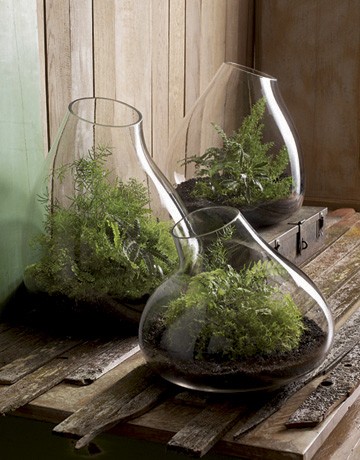


ferns are my favorite & I am so excited to bring mine out for spring this week.
all about ferns:
- Ferns belong to a group of plants called featherplants or pteridophytes, along with club mosses and horsetails.
- Coal is made largely of fossilized featherplants of the Carboniferous Period.
- There are now 10,000 species of fern living in damp, shady places around the world.
- Fern leaves are called fronds. When new they are curled up like a shepherd’s crook, but they gradually uncurl over time.
- Ferns grow into new plants not from seeds but from spores in two stages.
- First spores are made in sacs called sporangia. These are the brown spots on the underside of the fronds. From these spores spread out. Some settle in suitable places.
- Second spores develop into a tiny heart-shaped plant called a prothallus that makes male and female cells. When bathed in rain, the male cells swim to the female cells, fertilizing them. A new root and stem then grow into a proper fern frond and the tiny prothallus dies.
- more fern facts
- i love ferns.
- there's a funny show with Zach Galifianakis: between two ferns
Monday, April 23, 2012
Friday, April 20, 2012
morning glory


watch these beautiful flowers unfurl in the morning sun.
see them in all their glory during the early hours.
these flowers just last for a single morning and die in the afternoon.
learn more
picture source
123
see them in all their glory during the early hours.
these flowers just last for a single morning and die in the afternoon.
learn more
picture source
123


Monday, April 2, 2012
life lately.


the pups are happy about the spring weather.
i did some work in the garden over the weekend.
Ben still loves his Raleigh road bike.
my azalea is blooming.
for Sunday breakfast we ate at a little dive bar diner, Barbara Lee's Kitchen--i ordered the best waffle.
the whole experience filled me with nostalgia.
my parents always use to take me to those kinds of places when i was a little girl.
we went to a quaint diner like that in Montana after we got out of the back country in Glacier.
good things.
Subscribe to:
Posts (Atom)